
Looking for a SolarWinds Serv-U Alternative?
Recent news about SolarWinds Serv-U Managed File Transfer software shows why many businesses are looking for safer, more secure ways to move their data.
Complete the form to explore SolarWinds alternatives, get our free Managed File Transfer Guide, and speak with our experts about finding a more secure solution for your organisation.
SolarWinds Serv-U Security Concerns
Top SolarWinds Alternatives
If you’re searching for a secure SolarWinds alternative, choosing the right Managed File Transfer platform is critical for protecting your data and maintaining compliance.
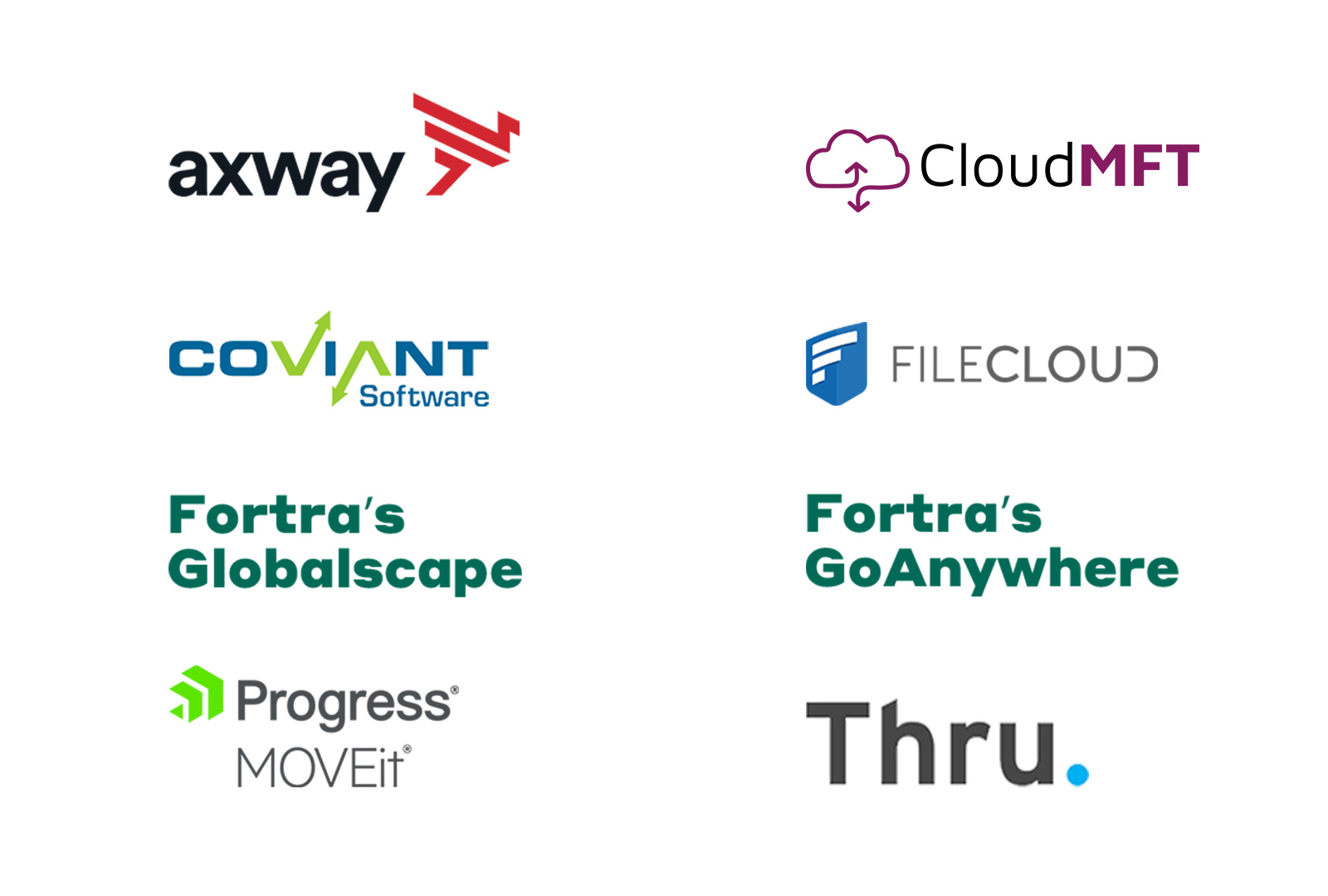
We support and deliver the leading SolarWinds MFT alternatives, including:
- Axway MFT
- Coviant Diplomat MFT
- Fortra Globalscape EFT
- Fortra's GoAnywhere MFT
- Progress MOVEit MFT
- Thru
- FileCloud
As secure file transfer specialists, we can help you identify, deploy, and manage the best SolarWinds Serv-U file transfer alternatives, carefully selected and tailored to your business needs.
Why Choose Pro2col to Manage Your Migration?
Specialist File Transfer Expertise
We are dedicated secure file transfer specialists. Our team works exclusively with Managed File Transfer and secure data movement platforms. That depth of expertise means your migration is carefully planned, securely implemented, and technically sound from day one.
Independent, Best-Fit Recommendations
We are not tied to a single vendor and we don’t push one platform over another. Our role is to understand your security requirements, technical environment, compliance obligations, and long-term goals, then recommend the solution that genuinely fits your needs.
Structured, Low-Risk Migration & Ongoing Support
Migrating away from any file transfer platform can feel overwhelming but it doesn’t have to be disruptive. We follow a structured migration approach that protects your data, maintains business continuity, and ensures your new solution is properly configured and optimised.
Frequently Asked Questions
Solarwinds Serv-U managed file transfer (MFT) solution has been a frequent target for cyberattacks. In 2024, a high-severity path-traversal flaw (CVE-2024-28995) was exploited, with three further critical Serv-U vulnerabilities addressed and patched in November 2025. More recently, in early 2026, four critical Remote Code Execution (RCE) vulnerabilities (CVE-2025-40538 to 40541) were patched in Serv-U 15.5.4. Understandably, this pattern has prompted many organisations to reassess whether the solution can meet current security expectations and as such, look towards more secure, automated, and modern MFT alternative.
At Pro2col, many organisations come to us when these challenges start to impact critical operations and risk posture. As a leading global MFT consultancy, we have extensive experience supporting complex MFT migrations, and can help assess your current file transfer environment, define the right requirements, and navigate the market to identify a solution that better meets your security, scalability, and compliance needs.
The more important question however though isn’t necessarily whether it’s secure enough, it’s what would break first if you don’t act, and how critical that would be to your business operations.
While Serv-U can appear attractive due to its low entry price point and ease of use, this doesn’t compensate for a lack of forward-looking product roadmap or pace of innovation when compared to enterprise-grade alternatives. Core components expected of a modern MFT platform are either limited or missing altogether, including a workflow engine, integration with DLP or antivirus solutions via ICAP, native PGP encryption, support for remote agents, dashboarding functionality, and integration with cloud storage or SaaS platforms.
When you’re an organisation handling business-critical file transfers, the stakes change. Sensitive data, growing ecosystems, and 24/7 operations mean security, reliability, and visibility cannot afford to be overlooked. As your demands increase, hidden gaps will very quickly start to become visible, whether that’s limited auditing, weaker controls, or difficulty scaling securely. At this stage, while your systems may not have reached breaking point yet, it’s a sign you need to act.
At Pro2col, we’ve seen concerns heightened by SolarWinds’ breach history. The volume of CVEs associated with both Serv-U and the wider SolarWinds portfolio has forced many organisations to re-evaluate their use of Serv-U and the risk they run in persevering with a tool that wasn’t designed with today’s enterprise threat landscape or operational complexity in mind.
We continue to see the shift toward more mature Enterprise File Transfer platforms that are built for scale, compliance, and resilience. These platforms go beyond basic SFTP to offer centralised governance, advanced automation, real-time monitoring, robust encryption standards, and comprehensive audit trails.
As organisations grow and file transfer becomes more embedded in critical workflows, if you haven’t already started looking, now is the time to explore modern, enterprise-grade MFT alternatives. At Pro2col, we’ve put together a range of resources to help you do just that. Start by checking out our software tools pages for both on-premise and cloud-managed file transfer solutions where our technical experts regularly review the marketplace to bring you the latest features, updates, and capabilities, all in one easy-to-access place.
Data transfers become harder to manage, processes that once ran smoothly require more hands-on oversight, and teams find themselves stepping in to keep things moving. As that reliance on file transfer increases, what was once ‘good enough’ begins to create friction. Visibility becomes limited, control is harder to maintain, and small inefficiencies add up. Over time, this slows operations, introduces significant risk, and makes it harder to meet both internal expectations and external demands.
Today, Managed File Transfer is recognised the workhorse behind business systems. Organisations need consistency, scalability, and confidence that everything will run as expected, without constant intervention. This is where Serv-U falls short. Modern File Transfer platforms are built for this level of maturity, they’re designed to support growing volumes, complex ecosystems, and the operational demands of enterprises that come with them, allowing teams to move from reactive management to controlled, scalable, and resilient file transfer.
At Pro2col, we know every organisation is different, with its own set of challenges and priorities. We’ve worked with businesses of all sizes, across industries, around the world. When file transfer underpins your operations, it’s not something you can afford to get wrong. A good place to start is downloading a copy of our Managed File Transfer Maturity Model, which helps you assess your current setup.
Based on the capabilities of the Serv-U platform, including its relatively limited advanced features and its history of CVEs, organisations relying on it as a standalone MFT solution typically fall into the ‘initial’ of the Maturity Model. Progressing beyond this level depends less on the platform itself and more on the technical expertise supporting it, as well as whether it is integrated within the broader SolarWinds product portfolio.
Organisations without a dedicated team to manage the solution, or where responsibility rests with a single individual, are more likely to remain at a lower level of maturity. In contrast, those with specialised internal teams or external expertise are better positioned to advance along the maturity curve. Whether you’re using SolarWinds Serv-U or another solution, you can use the MFT Maturity Model to assess your current position and identify the steps needed to move forward.
Compliance requirements are something every organisation faces, regardless of industry. Whether it’s financial services working to meet DORA, organisations handling personal data under GDPR, or others aligning with strict data protection standards, the pressure to get it right is always there. Having the right solutions in place across your business from the start means that when audits come around, it’s one less thing to worry about.
For many organisations, this particular question often arises when an audit is approaching and teams are under pressure, when a new regulatory requirement is introduced, or after a recent incident forces a closer look at how sensitive data is being handled.
As regulatory expectations increase year on year, particularly around data protection, encryption standards, and traceability, organisations need more than just secure transport. They need visibility, control, and the ability to evidence every action, who accessed what, when, how, and why.
Unlike SolarWinds Serv-U, modern Managed File Transfer platforms are built with compliance in mind, making it easier to enforce policies, standardise processes, and produce the level of reporting and auditability regulators expect. While SolarWinds Serv-U supports some compliance needs at a basic level, many that face increasing regulatory pressure often find it difficult to trustgiven its breach history. Serv-U’s track record of publicly disclosed Zero Day vulnerabilities and regular CVEs - including critical issues such as remote code execution flaws and other security advisories requiring urgent patching - undermine confidence in its long-term suitability for regulated environments. That’s why we would always recommend a move to a more robust, enterprise-grade MFT solution that can stand up to audit, scale with requirements, and reduce compliance risk over time.
At Pro2col, we offer the largest portfolio of Managed File Transfer solutions available. That means we’re not tied to a single vendor - we work with you to find the solution that truly fits your compliance and regulatory needs.
For some organisations, it’s reliability, when file transfers fail or require constant manual intervention. For others, it’s security and compliance, when audits become harder to pass or risk becomes harder to justify. And for many, it’s scale, when growing volumes and ecosystems push existing legacy tools beyond their limits which they can no longer suffice.
If you were to go directly to a solution provider, you’ll likely hear why their platform is the best option. And while it’s true that many modern Managed File Transfer solutions are an improvement on SolarWinds Serv-U, especially given its breach history, focusing purely on features can be misleading. Most MFT platforms will all tick similar boxes on paper, but the real difference is in the outcomes they deliver. The right alternative shouldn’t just meet your current needs, but should give you a solid foundation for the future. That means greater control, stronger security, improved visibility, and the ability for your solution to scale alongside your organisation.
As leading global file transfer and automaton experts, we take a vendor-agnostic approach, offering one of the largest portfolios of MFT solutions available, including GoAnywhere MFT, Globalscape EFT, Diplomat MFT, MOVEit, Axway Secure Transport, Boomi Managed File Transfer, Files.com, Kiteworks, and Quatrix. We don’t push a single product. Instead, we work closely with our clients to understand their current challenges and future requirements, then match you with the solution that will deliver the best long-term outcome for your organisation. If you’d like a head start, you can try our MFT comparison tool, a short series of questions designed to help identify the best fit for your needs.
Organisations typically engage Pro2col when they’ve reached a tipping point - when legacy file transfer tools like SolarWinds are creating bottlenecks and struggling to keep up with growing transfer volumes, compliance demands, or operational complexity. The idea of migrating a legacy solution can feel overwhelming, so we often see clients come to our team seeking the confidence that a complex migration will be handled end-to-end, from planning and risk assessment to execution and post-migration support.
Throughout the process, Pro2col acts as an extension of your team, enabling a smooth, controlled transition with minimal disruption while maintaining full visibility and control on your side.